Master Your Moments: A Journalist's Guide to Personal Time Management & Productivity
In a world that constantly demands your attention, mastering Personal Time Management & Productivity isn't just a nice-to-have skill – it's your secret weapon for sanity, success, and genuine fulfillment. You’re juggling deadlines, personal commitments, ambitious goals, and the endless ping of notifications. It’s easy to feel like you’re constantly reacting, not living. But what if you could take back control, intentionally shape your days, and achieve more without feeling perpetually overwhelmed?
This isn't about working harder; it's about working smarter, living richer, and crafting a life where your time truly serves your priorities. Let's dive in.
At a Glance: Your Roadmap to Mastery
- Take Control: Personal time management is about making conscious choices for how you spend your time, not letting time spend you.
- Fight Burnout: Good time management is a powerful shield against stress and burnout, which impacts a staggering 71% of knowledge workers.
- Boost Focus: Ditch multitasking; it can slash your productivity by up to 40%. Focus on one thing at a time.
- Prioritize Ruthlessly: Learn frameworks like the Eisenhower Matrix or the Pareto Principle to identify what truly matters.
- Structure Your Day: Use techniques like Time Blocking or the Pomodoro Technique to create dedicated work and rest periods.
- Guard Your Attention: Minimize distractions, schedule breaks, and protect your peak productivity hours.
- Leverage Tools (Wisely): Task managers, calendars, and time trackers can support your efforts, but aren't a magic bullet.
- It's a Journey: Time management is a skill you develop over time, requiring self-awareness, discipline, and a willingness to adapt.
Why Your Time Matters More Than Ever (The Stakes Are High)
At its core, personal time management is the practice of consciously organizing, planning, and prioritizing your daily activities to maximize your time. It’s about seizing control of your schedule, making deliberate choices, and ensuring your precious hours are spent with intention, not just reaction.
Why is this so crucial in today's fast-paced environment?
- Achieve Your Goals: Whether personal or professional, your aspirations remain distant dreams without a structured approach to getting things done. Effective time management breaks down big goals into actionable steps, making them attainable.
- Combat Stress and Burnout: The feeling of being perpetually behind or overwhelmed is a fast track to stress. In fact, a 2020 study revealed that 71% of knowledge workers reported experiencing burnout. Proactive time management creates space, reduces last-minute scrambles, and fosters a calmer, more controlled existence.
- Skyrocket Productivity: Think you're a multitasking master? Think again. Research consistently shows that multitasking can reduce productivity by as much as 40%. By focusing your efforts, you enter a "flow state," accomplishing more high-quality work in less time.
- Enhance Quality of Life: When you manage your time well, you create room for what truly enriches your life – hobbies, relationships, relaxation, and self-care. It’s about building a life that feels balanced, not just busy.
- Set Healthy Boundaries: Good time management helps you establish clear lines between work and personal life, preventing one from bleeding into the other. It empowers you to say "no" to commitments that don't align with your priorities, protecting your precious energy.
- Break Bad Habits: Procrastination, endless scrolling, and last-minute rushes often stem from a lack of structure. Implementing time management techniques can help you replace these unproductive patterns with intentional, goal-oriented actions.
Ultimately, mastering your time isn't about cramming more into your day; it's about making deliberate choices that lead to a more purposeful, productive, and peaceful life.
Your Personal Time Management Toolkit: Core Strategies
Let’s unlock the practical strategies that will transform your approach to time.
1. The Art of Knowing What Matters: Planning & Prioritization
Before you can manage your time, you need to understand where it should go. This is where strategic planning and ruthless prioritization come into play.
- Craft Your To-Do List (Wisely): Don't just dump tasks onto a page. Categorize them. Break down big projects into smaller, manageable steps with realistic deadlines. Aim for goals that are SMART: Specific, Measurable, Achievable, Relevant, and Time-bound.
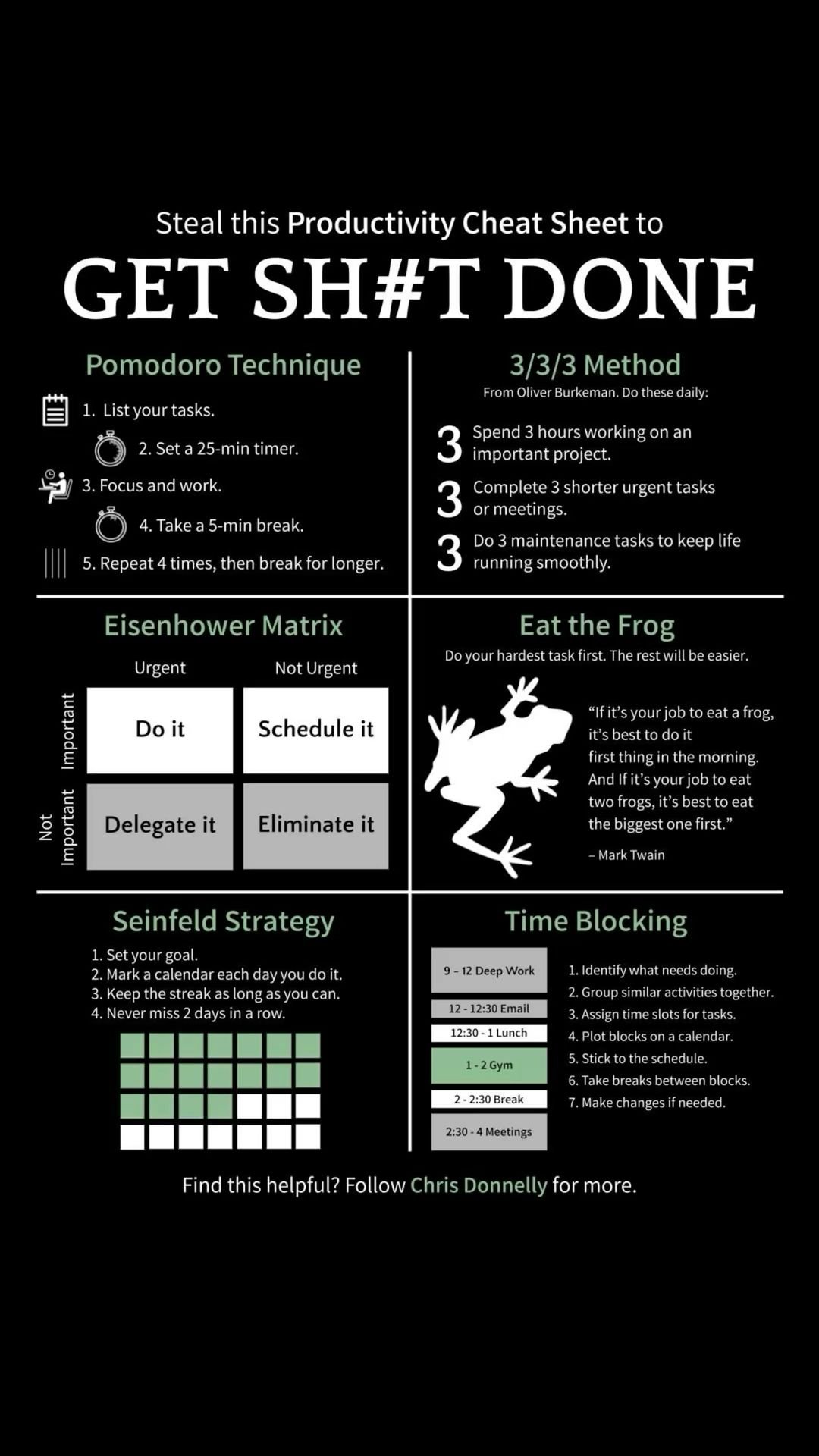
- The Eisenhower Matrix: Urgency vs. Importance: This powerful framework helps you categorize tasks into four quadrants:
- Urgent & Important (Do First): Crises, deadlines, pressing problems. Tackle these immediately.
- Important, Not Urgent (Schedule): Prevention, planning, relationship building, new opportunities. This is where real growth happens. Dedicate specific time.
- Urgent, Not Important (Delegate): Interruptions, some emails, minor requests. Can someone else handle this?
- Not Urgent & Not Important (Eliminate): Time wasters, busywork. Just don't do them.
- The ABC Method: A simpler prioritization technique. Assign:
- A: High priority – Must be done today.
- B: Medium priority – Should be done, but can wait if "A" tasks require full attention.
- C: Low priority – Nice to do, but not critical.
- The 80/20 Rule (Pareto Principle): Often, 20% of your efforts produce 80% of your results. Identify those crucial 20% tasks and focus your energy there. Conversely, you might find that 80% of your small, quick tasks can be completed efficiently to free up time for the 20% of larger, more complex ones.
- "Eat the Frog": Tackle the Toughest First: Mark Twain famously said, "Eat a live frog first thing in the morning and nothing worse will happen to you the rest of the day." Identify your biggest, most complex, or most daunting task – your "frog" – and tackle it first thing. This builds momentum and prevents procrastination.
- Getting Things Done (GTD): David Allen's method involves five steps: Capture everything that has your attention, Clarify what each item means and what to do, Organize it into appropriate lists, Reflect on your system regularly, and Engage with your work. It's a comprehensive system for managing all your inputs.
- Connect to the Bigger Picture: Only 26% of employees have a "very clear" understanding of how their daily work connects to team or company goals. Take a moment to understand how your tasks contribute to larger objectives. This provides motivation and helps you prioritize tasks that truly move the needle.
- The 5-Minute Daily Plan: Before you shut down for the day, spend 5 minutes planning for tomorrow. This primes your brain, reduces decision fatigue, and allows you to hit the ground running the next morning.
2. Sculpting Your Day: Structuring Your Time
Once you know what needs to be done, you need a framework for when to do it. Structuring your time consciously can prevent your days from feeling like a reactive whirlwind.
- Time Blocking: This is like creating appointments with yourself for specific tasks. Allocate specific time slots on your calendar for different types of work (e.g., 9-11 AM for deep work on Project X, 11-12 PM for communication, 1-2 PM for meetings). This visual commitment reduces distractions and ensures important work gets dedicated time.
- Timeboxing: Similar to time blocking, but with a strict cap. You commit to working on a specific task within a "timebox," typically no more than three hours. The goal isn't necessarily to finish the task, but to make significant progress within that defined period. When the timebox ends, you move on.
- The Pomodoro Technique: Work in highly focused, short intervals (typically 25 minutes) followed by a 5-minute break. After four "Pomodoros," take a longer break (20-30 minutes). This method boosts focus, prevents burnout, and makes daunting tasks feel more approachable.
- Establish Routines: Automate recurring tasks by creating consistent routines. Check email at specific times, update reports on a fixed schedule, dedicate certain days to specific client work. This reduces decision fatigue and builds consistency.
- Create Schedules (Students & Parents): For students, a study schedule is non-negotiable. For parents, a family calendar can be a lifesaver, coordinating activities, appointments, and shared responsibilities.
- Allocate Dedicated Creative Time: Creative work often gets pushed aside by urgent tasks. Intentionally block out specific, uninterrupted time for creative endeavors. Treat it like a critical meeting you cannot miss.
3. Maximizing Every Moment: Task Management & Efficiency
It's not just about what you do, but how efficiently you do it. These strategies focus on streamlining your efforts and avoiding common productivity traps.
- Embrace Single-Tasking: As mentioned, multitasking is a myth. Focus on one task at a time to achieve a "flow state" where you're deeply immersed and highly productive. Close unnecessary tabs, silence notifications, and give your full attention.
- Learn to Delegate & Say "No": You can't do everything.
- Delegate: Identify tasks that can be handled by others – team members, freelancers, virtual assistants, or even family members. Freeing up your time for high-priority tasks is crucial for growth.
- Say "No": Politely but firmly decline commitments that don't align with your goals or priorities. Your time is finite; protect it fiercely.
- Audit Your Tasks Regularly: Periodically review your commitments. Ask yourself: Is this task still relevant? Am I the best person to do it? If not, stop doing it, or delegate it. This "decluttering" of your responsibilities prevents task creep.
- Group Similar Tasks (Batching): Instead of bouncing between different types of tasks (e.g., email, report writing, phone calls), group similar ones together. Respond to all emails at a specific time, make all your calls back-to-back, or handle all administrative tasks in one block. This reduces context-switching costs.
- Leverage Micro-Gaps: Those 5-10 minute gaps between meetings, while waiting for a coffee, or commuting on public transport? Use them wisely. Draft a quick email, organize your desktop, review your to-do list, or do a small, quick task.
- Break Down Projects: A large project can feel daunting. Break it into smaller, manageable sub-tasks, each with its own mini-deadline. This makes the project feel less intimidating and provides a clearer path forward.
- Use Timers: For specific activities, especially those prone to time overruns, set a timer. This could be for checking email (e.g., 15 minutes), brainstorming, or even a specific research task.
4. Protecting Your Focus & Well-being: Minimizing Distractions & Self-Care
Your ability to manage time effectively hinges on your ability to focus and maintain your energy. Don't underestimate the power of self-care and environmental control.
- Minimize Digital Distractions: The average knowledge worker switches between 10 applications up to 25 times a day. Turn off notifications on your phone and computer, use "Do Not Disturb" features, and consider website blockers for known time-wasting sites during focused work periods.
- Take Regular Breaks: Your brain isn't designed for sustained, uninterrupted focus. Regular breaks are essential for recharging and preventing mental fatigue. Remember that 32% of those experiencing burnout reported being unable to detach from work. Schedule short breaks (5-15 minutes) and longer ones (30+ minutes) throughout your day. Step away from your screen, stretch, grab a snack, or step outside.
- Prioritize Self-Care: Time management isn't just about work. It's about life. Schedule time for exercise, hobbies, meditation, spending time with loved ones, and adequate sleep. These aren't luxuries; they're essential for sustained productivity and well-being. Think of it as investing in your most important asset: yourself. Much like planning a fulfilling trip, dedicating time to self-care ensures you're refreshed and ready for all of life's adventures, whether it’s a demanding work project or even planning your complete dating guide.
- Organize Your Physical Space: A cluttered desk often leads to a cluttered mind. Take a few minutes each day to tidy your workspace. Visual clutter can be a subconscious source of distraction and stress.
- Leverage Your Peak Productivity Hours: Are you a morning person or a night owl? Identify when you're most alert and energized, and schedule your most demanding or creative tasks for those times. Use your lower-energy periods for administrative tasks, emails, or less demanding work.
Your Digital Allies: Essential Time Management Tools
While tools aren't a substitute for good habits, they can significantly support your time management efforts.
- Task Management Apps: Tools like Todoist (or Asana, Trello, Microsoft To Do) help you capture, organize, and prioritize your to-do lists across devices. They can set reminders, recurring tasks, and integrate with calendars.
- Time Tracking Apps: Apps like Toggl or RescueTime help you understand where your time actually goes. Toggl lets you manually track time on specific tasks, while RescueTime runs in the background, categorizing your digital activities. This data is invaluable for identifying time sinks and improving estimates.
- Digital Calendars: Google Calendar (or Outlook Calendar, Apple Calendar) is indispensable for time blocking, scheduling meetings, setting reminders, and coordinating with others. Use different colors for different types of commitments to get a quick visual overview of your day.
- Project and Work Management Tools: For teams or complex personal projects, tools like Jira, Basecamp, Monday.com, or ClickUp can help manage tasks, track progress, set deadlines, and facilitate collaboration.
Tailoring Time Management: Advice for Every Walk of Life
Time management isn't one-size-fits-all. Here’s how you can adapt these principles to your unique situation:
- Busy Professionals:
- Plan Your Day: Dedicate the first 15 minutes of your morning to reviewing your priorities and blocking out your day.
- Realistic Goals: Don't overload your plate. Be realistic about what you can achieve in a given day.
- Avoid Multitasking: During focused work, close email and messaging apps.
- Establish Routines: Automate decision-making for recurring tasks (e.g., checking email at 9 AM and 2 PM only).
- Students:
- Create a Study Schedule: Block out specific times for different subjects and assignments.
- Set Goals: Break down large assignments into smaller, daily study goals.
- Regular Breaks: Use the Pomodoro Technique to avoid burnout during long study sessions.
- Join Study Groups: Collaboration can enhance understanding and accountability.
- Entrepreneurs:
- Delegate Ruthlessly: Outsource administrative tasks, marketing, or specific projects to free up your time for strategic growth.
- Establish Routines: Crucial for maintaining structure in an often unstructured role.
- Prioritize Business Goals: Focus on tasks that directly contribute to revenue, growth, or product development.
- Network Strategically: Allocate time for connecting with peers and mentors.
- Automate: Leverage tools to automate repetitive business processes.
- Parents:
- Family Calendar: Use a shared digital or physical calendar for everyone's activities.
- Daily Routines: Develop consistent routines for meals, homework, and bedtime.
- Delegate Household Tasks: Involve children and partners in chores.
- Set Boundaries: Protect dedicated "family time" and "me time."
- Use Timers: For screen time, playtime, or even chore completion.
- Self-Employed Individuals:
- Set a Routine: Mimic a traditional workday structure to maintain discipline.
- Goal Setting: Define clear business and personal goals.
- Project Timelines: Break down client projects into manageable phases with clear deadlines.
- Boundary Setting: Separate work and personal life physically (e.g., a dedicated workspace) and mentally.
- Network: Actively seek out networking opportunities for business development.
- Small Business Owners:
- Strategic Delegation: Empower employees to take on more responsibilities.
- Business Goals: Regularly revisit and align your daily tasks with overarching business objectives.
- Optimize Processes: Continuously look for ways to streamline operations and reduce wasted time.
- Creatives:
- Dedicated Creative Time: Block out uninterrupted hours for deep, focused creative work.
- Break Down Projects: Deconstruct large creative projects into smaller, achievable milestones.
- Find Your Peak Hours: Understand when you're most creatively inspired and schedule your most important work during those times.
- Protect Against Burnout: Creativity needs rest and rejuvenation.
The Journey Ahead: Small Steps, Big Impact
Personal time management and productivity isn't a destination; it's an ongoing journey of self-awareness, discipline, and continuous improvement. It requires you to be honest about how you currently spend your time, courageous enough to change habits, and adaptable when things don't go as planned.
Start small. Pick one or two techniques from this guide that resonate most with you and commit to trying them consistently for a week. Notice what works, what doesn’t, and adjust your approach. Over time, these small, consistent efforts will compound, allowing you to reclaim your time, reduce stress, and build a life that feels intentionally designed by you, not dictated by external demands.
The power to transform your days, and ultimately your life, lies within your grasp. It’s time to seize it.